


When sourcing outdoor furniture, the numbers on a price sheet are the easiest thing to compare. But what actually determines whether a purchase becomes an asset or a liability five years down the line is something you can’t see at all — whether the furniture can stand up to the sun.
For a homeowner, fading is a cosmetic issue. For hotels, resorts, restaurant chains, and furniture dealers, faded outdoor furniture means negative reviews, unbudgeted replacement costs, depreciating channel inventory, and even compliance risk in tenders. In this article, we break down — in plain language — how fade-resistant outdoor furniture is actually made, the procurement logic behind commercial outdoor spaces, and the four questions that reveal a supplier’s true capability when you’re buying in bulk.
What Is Fade-Resistant Technology? In a Sentence: Sunscreen for Furniture
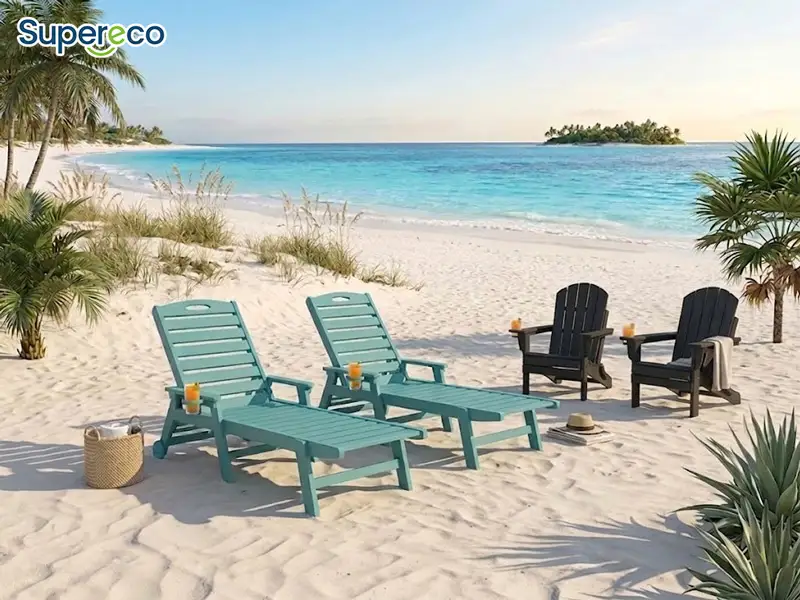
HDPE (high-density polyethylene — the “poly lumber” made from recycled plastic bottles) is an exceptionally durable outdoor material: it won’t rot, won’t attract insects, and won’t crack or splinter. But it has one natural enemy — ultraviolet radiation from the sun. Prolonged exposure gradually lightens the color, chalks the surface, and makes the material brittle.
The industry’s answer is the UV inhibitor: a protective additive blended uniformly into the raw material at the board-production stage. Think of it as “sunscreen mixed into the plastic” — working around the clock from day one, rather than treating sun damage after it happens.
That’s why two pieces of plastic furniture can age so differently: one turns chalky and washed out in three years, while another keeps its color on a beachfront resort for a decade. The difference isn’t the word “plastic” — it’s the formulation and process investment. And that’s precisely the part that’s hardest to judge with the naked eye, and easiest for a low price to hide.
Fade resistance is not “a coat of fade-proof paint.” In genuinely all-weather outdoor furniture, the color is blended into the board during production — the same color from core to surface, so even if the board wears down a layer, it’s still that color. On spray-painted or veneered furniture, sun and cleaning eventually strip away exactly that “skin.” Solid, through-color construction versus surface coating is the first dividing line between grades of HDPE furniture.
Why Commercial Spaces Need Fade Resistance Far More Than Homeowners Do
1. Harsher environments, multiple times faster fading
UV intensity at a tropical resort far exceeds that of a temperate city. Poolside furniture breathes chlorine-laden vapor every day. Coastal projects battle salt air on top of it all. For resort outdoor furniture, fading can run three times faster than in a typical residential setting — which means selecting furniture to residential standards for commercial use is, in effect, writing in an early-retirement clause.
2. Furniture is part of the property’s image
A guest snaps one photo of a chalk-white lounger by the pool, and it can end up in the review section of a booking platform. For hotel management groups, the condition of outdoor furniture directly shapes how guests judge the property’s caliber — which is why more and more international hotel chains now write “fade-resistance warranty period” into their FF&E procurement specifications.
3. The real cost math is total cost of ownership
The easiest trap in commercial procurement is comparing purchase prices only. Say a resort buys 200 loungers: a low-cost product with no fade-resistant formulation might be 30% cheaper — but if the whole batch needs replacing in 3 years while solid-color HDPE lasts 10-plus, then once you add replacement cost, labor for the closure and re-installation, and the loss in guest experience, the cheap product’s ten-year total cost is actually higher. The value of UV-inhibitor technology is essentially trading a modest formulation cost for a much longer asset life cycle — which is exactly why it belongs in your purchase contract.
Buying in Bulk? Four Questions That Test a Supplier
You don’t need to decode a thick stack of lab documents to judge a manufacturer’s fade-resistance capability. Ask these four questions and you’ll know where you stand:
|
Notice the last question: it’s no longer about fade-resistance technology — it’s about supply chain stability. For B2B buyers, bulk production that drifts from the approved sample is more damaging than a mediocre product in the first place — especially when your channel spans hundreds of store locations, or a project owner accepts the entire shipment against a showroom sample.
How SuperecoPatio Turns Fade Resistance Into a Verifiable Promise
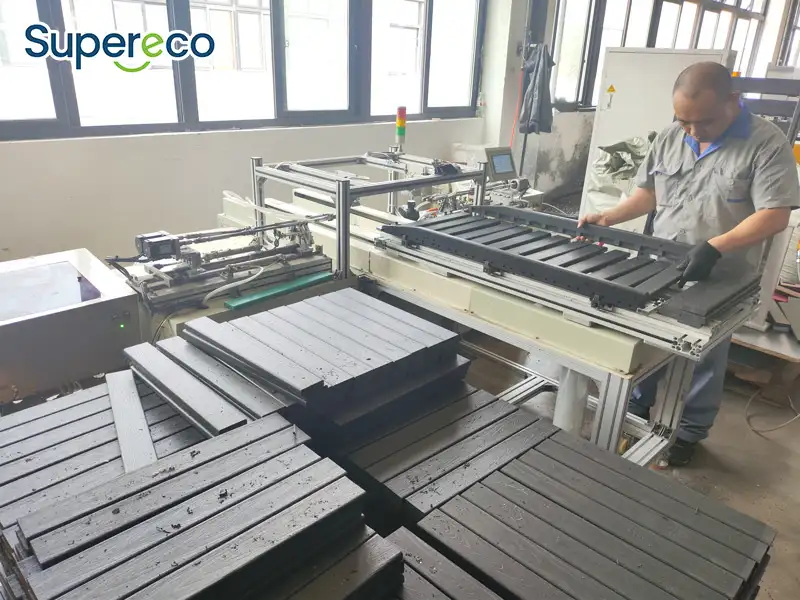
Having set the standard, let’s look at what these commitments look like in practice at a real manufacturer. SuperecoPatio is a China-based manufacturer and international supplier of HDPE outdoor furniture, operating a large-scale facility in Linyi. Since expanding into international markets in 2008, its products have reached buyers in more than 70 countries and regions — wholesalers, distributors, retailers, hospitality groups, and commercial project buyers.
- 120+ production lines supporting stable delivery of wholesale and bulk orders
- 70+ countries and regions served, including the US, Europe, and Australia
- Since 2008 international trade experience — manufacturing, QC, and export under one system
- SGS / Intertek independent third-party testing covering structure and UV resistance
On fade resistance specifically, SuperecoPatio’s practices map directly to the four questions above:
- Through-color, starting at the raw material. SuperecoPatio uses HDPE with 95% recycled content, with the UV-protective formulation blended evenly into the board at production — the same color from core to surface, built for high-UV environments such as the tropics and the coast.
- Dual quality gates: in-house lab plus independent third parties. The factory runs a dedicated testing laboratory with batch-level control over structural strength, load performance, dimensions, materials, and UV resistance, while products are periodically tested through independent organizations such as SGS and Intertek — turning “fade resistance” from a marketing phrase into something you can actually inspect.
- The promise is written into the warranty. SuperecoPatio offers a 15-year limited warranty that explicitly covers fade resistance, applicable to commercial projects as well.
- Capacity that backs up bulk consistency. More than 120 production lines support everything from standard orders to large-scale OEM/ODM programs — colors, surface textures, product configurations, branding, and packaging can all be customized to project requirements, with every custom color running the same fade-resistant formulation. A “special color” never means a lower weathering standard.
For dealers and project buyers, the significance of this kind of systemized capability is simple: you’re not just buying a chair — you’re securing a supply chain that is predictable, repeatable, and built for long-term partnership.
Get the samples and test data in hand before you decide.
Dealers & importers: request the product catalog, color swatches, and third-party test documentation to evaluate a wholesale partnership or regional dealership opportunity.
Hotels, resorts & commercial projects: send us your project specifications (quantity, colors, delivery timeline) for a project-based quotation and pre-production sampling plan.
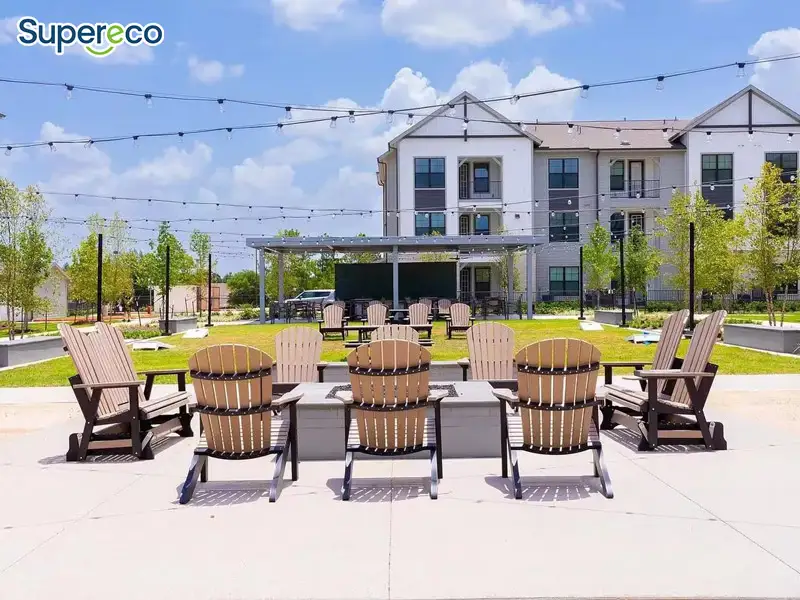
👉 Browse the SuperecoPatio fade-resistant Adirondack chair collection, or contact our international sales team directly.
FAQ About HDPE Outdoor Furniture
Q1: Does HDPE furniture really not fade?
No material is 100% immune to UV — the difference is how long it takes for fading to become visible to the eye. With a properly formulated HDPE furniture, color change remains negligible over many years of normal outdoor use; a cheap product without UV protection can turn visibly chalky within a single summer. That’s why fade-resistance commitments should be tied to warranty terms at the sourcing stage.
Q2: Can faded HDPE furniture be restored?
Essentially, no. On through-color boards, surface stains can be washed back with soapy water, but lightening of the color itself cannot be reversed. This is why fade resistance has to be built in up front — locking in the formulation at product selection, not attempting repairs afterward.
Q3: What are the typical MOQs and lead times for bulk orders?
At SuperecoPatio, the standard MOQ is 50 pieces per model, while custom OEM orders require a minimum of 100 pieces per model. Production typically takes 15–30 days, depending on order quantity and customization requirements.
Q4: Our project has brand-image requirements — can colors and branding be customized?
Yes. SuperecoPatio’s OEM/ODM coverage spans colors, surface textures, product configurations, brand marking, and packaging. Hotel groups can match colors to their VI guidelines, and dealers can develop their own private-label programs. All custom colors use the same fade-resistant formulation as standard colors — the weathering warranty is unaffected.
Q5: How can we confirm bulk production matches the approved sample?
Two moves: first, write acceptance criteria (color, structure, load performance) into the contract; second, prioritize suppliers with in-house batch-level lab control plus third-party testing. SuperecoPatio supports pre-shipment inspection — conducted by the buyer or a third party — and provides retained samples for comparison.
Conclusion: Write Fade Resistance Into Your Procurement Standard
For commercial outdoor spaces, fade-resistant outdoor furniture isn’t a nice-to-have — it’s baseline infrastructure that directly affects guest experience, brand reputation, and asset life cycle. On a practical level, that means building three things into your sourcing process: verify through-color construction, require a commercial warranty that covers fading, and validate third-party testing and batch-level quality control.
If you’re sourcing sun-proof outdoor furniture for a hotel, resort, or distribution channel — from Adirondack chairs and chaise lounges to outdoor dining sets and deep seating — browse the SuperecoPatio HDPE outdoor furniture wholesale products collection, or talk to us about an end-to-end partnership, from product specification to shipment.